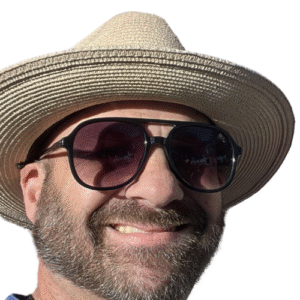
By Timothy Yeahquo, Jr.
I am a husband, a father of six, and a proud Kiowa. My family means everything to me. They have been my motivation to keep going during some of the darkest moments of my life. I live with Obsessive Compulsive Disorder (OCD), though I didn’t know it for most of my adult life.
It took me sixteen years from the onset of my more serious symptoms to finally get a correct diagnosis. I thought OCD was about being overly neat, washing your hands all the time, or constantly checking locks — like Mr. Monk. I didn’t have any of those visible compulsions, so I had no clue that OCD was even a possibility.
I was 22 when everything went haywire. Brought on by severe physical sickness, my mind started producing thoughts I didn’t recognize — intrusive, unwanted thoughts that were violent and taboo in nature. They horrified me. I remember thinking, “What if I act on these?”
This began a constant mental rollercoaster: the thought would come, I’d panic, and then I’d spend hours reassuring myself I would never do anything “crazy.” At the time, I didn’t realize that reassurance was actually a mental compulsion, and it was feeding the OCD cycle. I just knew I felt trapped in my own head.
Eventually, I was able to pull out of that first spiral, and life felt good again. But I didn’t realize that without treatment, the cycle could and would come back.
In 2014, the thoughts and anxiety returned as well as the cycle of mental checking and reassurance. What made this disorder brutal for me was how extreme the contrast was: when things were good, they were really good. But when I spiraled, I spiraled hard. Functioning in daily life became nearly impossible.
From 2014 onward, every two years or so, I’d go in and out of OCD episodes. Each time, it would last longer and feel more intense. The thoughts seemed sharper, the anxiety heavier. I often felt like I was losing my mind.
In 2024, as I approached my 40s, my OCD escalated into severe panic and constant anxiety about my thoughts. On August 6th, I had a massive panic attack at work. I’d had enough. I was exhausted from fighting my own mind, and I thought about my wife and kids — I couldn’t keep living this way, not for me and not for them.
That night, I admitted myself into a partial hospitalization program. For two months, I stepped away from work to try to figure out what was happening in my mind and how to fix it.
During that time, I remembered something from years earlier. I’m a big fan of comedy and often watch YouTube clips of stand-up comedians. One night, I saw a set by Maria Bamford, where she talked openly about her intrusive thoughts and how she handled them. It struck me back then: those sound a lot like mine. She mentioned having OCD and getting treatment.
While in the hospital program, that memory came back. I realized I was ready to stop hiding and finally find out if this was OCD. One afternoon, I called a provider to ask if they took my insurance. They didn’t — but before I hung up, the person on the phone said, “If you do therapy, make sure you look into ERP.” I had no idea what exposure and response prevention (ERP) was, but I wrote it down.
I searched for a therapist who specialized in ERP and OCD. When I found one, I decided the shame and fear that had kept me silent for years would not win this time. I told them everything — every intrusive thought, every fear, every pattern I’d noticed.
My therapist didn’t hesitate: I had all the traits and symptoms of OCD. For the first time in 16 years, I had a name for what was happening. More importantly, I had a treatment plan.
I’ve been doing ERP for about a year now. I haven’t mastered OCD, and I’m not cured, but something in me has shifted. ERP was very difficult at first — leaning into the thoughts instead of running from them went against everything my anxiety wanted me to do. But with time, the weight began to lift.
Today, my thoughts still come, but I don’t fight them the same way. I no longer get stuck in endless reassurance loops. My anxiety doesn’t control my day-to-day life. I truly feel like I’ve been given a second chance — like I’ve gotten my life back from the grips of OCD.
I’m still a husband, a father of six, and a proud Kiowa but now I’m also someone who knows I can live a full life, even with OCD.
About the Author:
I’m Timothy Yeahquo Jr., a married dad of six living on the Oklahoma Plains. I’m a proud member of the Kiowa Tribe of Oklahoma. I write kids’ books and share my OCD journey, hoping my story—and the stories I tell—can help others find hope and healing.

The post Finding Answers after Sixteen Years in the Dark appeared first on International OCD Foundation.